Saturday, July 15, 2006

Movin’, movin’, movin’


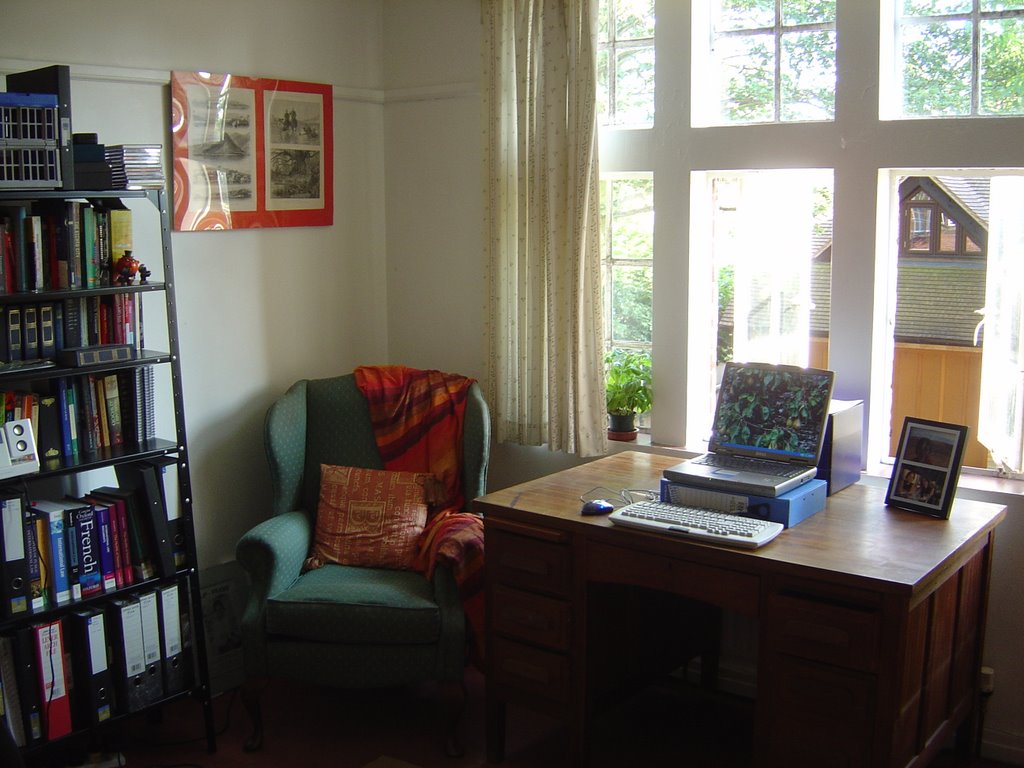
(New desk, click for bigger image)


I’ve often blogged about how often I move. However, the last two years in Cambridge I managed to stay in the same building and just upgrade rooms. Easiest move ever: just prop two doors open and carry everything up a flight of stairs.

Now, though, I’ve finally done it. Private accommodation, outside the sheltering womb of college and onto the UK rental market. After looking at some total dives, I got lucky. There’s a flat just behind the law faculty that’s been handed down through a few generations of Trinity Hall PhD students now. The location is ideal, the rent is very good and the carpets … well, let’s not talk about the carpets.

The flat is, a rarity for Britain, let without furniture. The system that’s evolved is incoming flatmates pay the out-goer for their room furnishing and the communal bits and bobs, then add and subtract as they see fit.

I immediately wanted to subtract a desk (huge, government issue, ugly with heavy metal filing drawers), a small wardrobe with vanity (less than 30 centimetres rail space) and a chest of drawers. The drawers were amusing. You could open three of four on any given day, but with few guarantees as to which. (“Right, I’m just about ready to go out … but it seems my socks and underwear are not. Hmm …”)

So I hit the local Salvation Army store where the finest in Cambridge’s veteran and slightly scarred furniture turns up. I found a big sturdy wardrobe, an impulse-buy armchair and a mock-Edwardian, seven-drawer writing desk. The nice people there even said they’d take away my old furniture as a donation (and, frankly, a kindness) when they delivered.

I paid up and turned to leave when I saw the fateful sign: “It is your responsibility to check furniture will fit through your doors.”

I measured the width of my new desk. About 80 centimetres and thought of the narrow front door to the new flat. “It’ll be fine,” I thought.

Getting home, I measured the back of the door, 81 cm, and sighed with relief.

Then realised the door has a thickness. Opened, the thickness of the door would have to be subtracted from the width of the frame. I measured the door's thickness, 4 cm.

“It’ll be fine!” I thought, not very convinced.

Next day the Salvo’s arrived and genially hauled my first piece up the stairs: the desk. Lining it up with door, it just wouldn’t go through. It couldn’t be angled around as the stairway was too tight, the door opened into a tiny vestibule and the desk’s sides were solid.

“Um,” I said in desperation, “if you lend me a screwdriver, I’ll take the front door off its hinges.”

So, they schlepped to and fro with furniture old and new(er), while I removed the front door and parked it inside.

The desk was heaved up again, rotated on its side and gently eased towards the door frame. And stopped.

“Just needs another quarter of an inch,” one of the deliverers said. “Tell you what. Take the screwdriver and see if you can get the top off.”

Fortunately, it looked like this had been done before: a variety of screws secured the writing surface on only three sides. With the top off, it slid through. Just.

“You like this because it had character, didn’t you?”

“Yes,” I answered sheepishly, “I guess I just didn’t realise how much.”

“Hmm. Do you want us to stay while you reassemble that, or are you going to buy a screwdriver?”
Sunday, June 25, 2006


May Week once more

Any week that ends with you having the champagne (well, Cava) stains dry-cleaned out of your pale linen suit has to be May Week.

For those who've not been lurking around this blog that long, or have but haven't paid much attention, May week is a week in June that celebrates the end of the academic year with Pimms-drenched garden parties and stay-til-dawn College balls.

This year I hit the garden party circuit harder, and kept myself to one college ball, going to the Caius (say "keys") Ball with a group of PhD mates.

That said, I may be getting old and jaded. I was feeling tired after just two days of steady-but-never-roaring-drunk drinking and pushinng on until dawn at the Caius ball felt particularly rough between about 2.30 and 4 am.

However, once dawn started to break around 4 (it hadn't been properly dark until 9.30 anyway) I perked up remarkably and went in search of a black coffee and steak sandwich. (As opposed to the mixture of voda and fruit juice that got me through the chill morning that followed the Jesus Ball last year.)

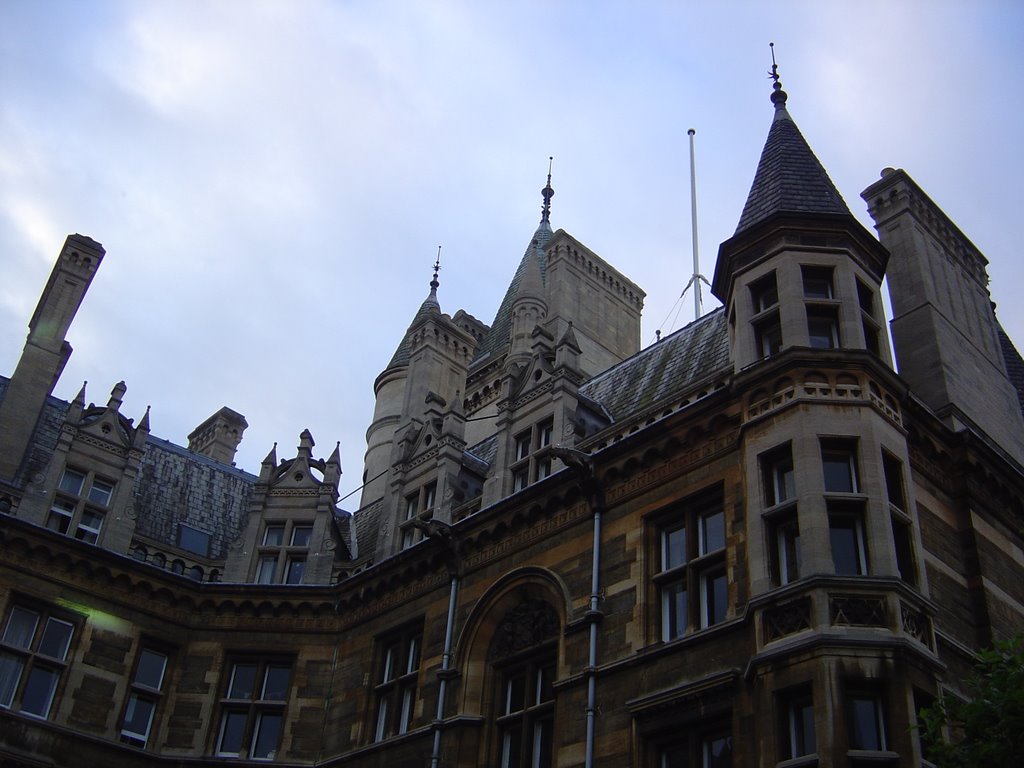
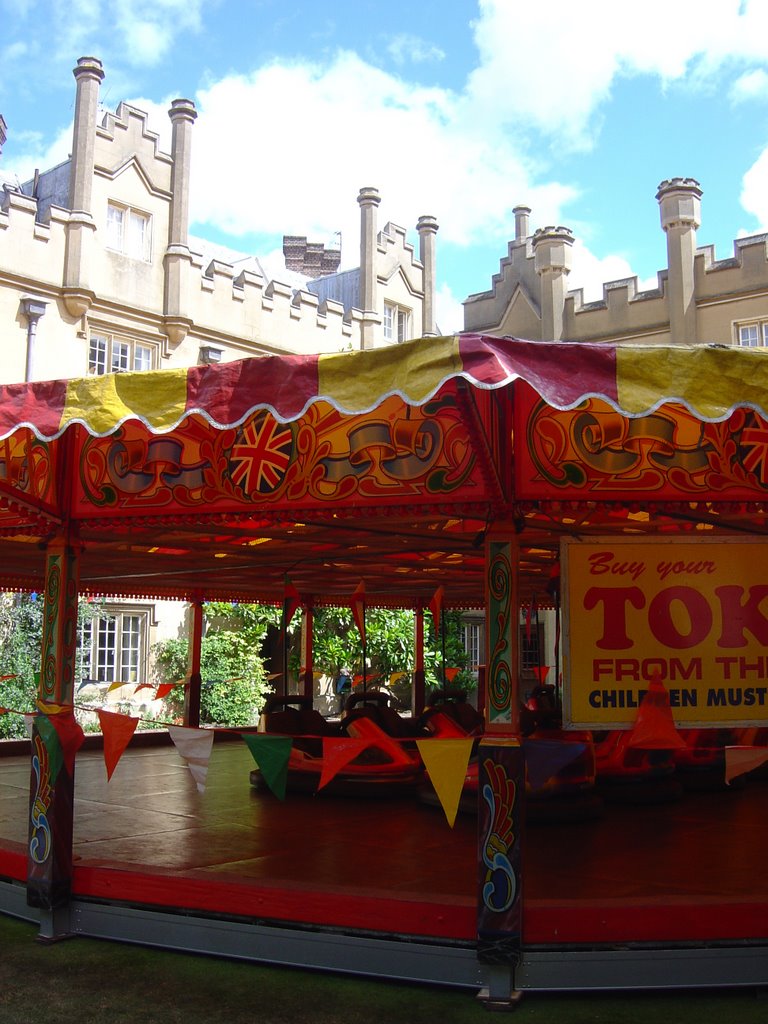
Caius is a gorgeous college and it was a good night (a photo of the college at dawn to the left).

Unfortunately, the weather wasn't 100% with us. A light misting rain was falling a lot of the night. It was that typically English rain that if you stood out in it long enough would never be heavy enough to soak you through, but you would start to grow moss. It was mostly only visible in the spotlights, but did put a dampner (no pun ...) on the outdoor activities.

Even the music venue tent wasn't totally spared: a gust of wind could send water crashing off its non-existent eaves onto anyone unfortunate enough to be at the fringes.

Still, good food, drink, company and some memorable comedy and music acts in a wonderful setting. Even if the dining room of the Senior Parlour looked mock Greco-Roman in a Las Vegas kind of a way ...

Tuesday, June 13, 2006


Fun in the sun in France

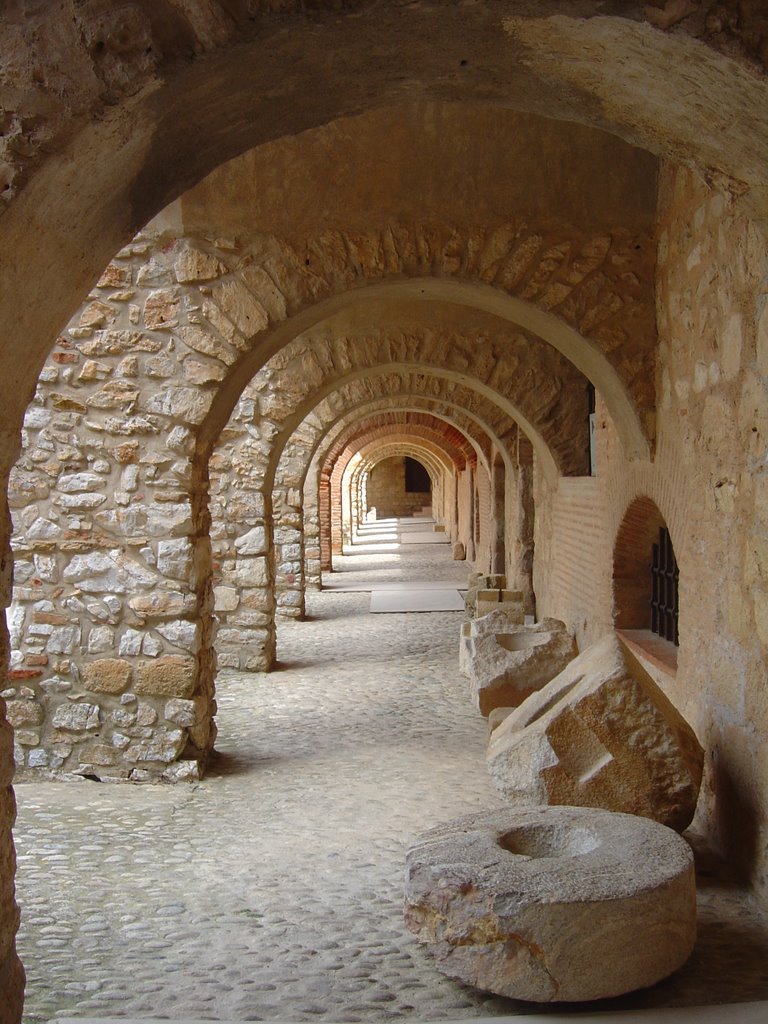
So Monday I got back from five glorious days in the South of France. I won’t bore you with too many details, just photos.

The basic day consisted of rising around 10 for a breakfast of fruit, yoghurt bread and honey. We'd then leave the house at the crack of noon, and zip off to stand in a ruined Cathar fortress on a mountain ridge for a bit, going “Oooh, pretty.”

This was usually followed shortly by, “Right. Where shall we go for lunch?”

This in turn lead to several hours of eating far too much and washing it down with litres of Rosé, before crawling home for a nap and a late cheese-platter dinner.

It was great to see Beth, Peter and Jasmine and Clay in particular was an absolute legend for doing all the driving. This really was the neglected Southeast of France where doing anything definitely required a car.

In fact, we were so far off the backpacker and American tourist trail that the village where we stayed wasn’t even listed in Wikipedia or google!

The low tourist population was probably just as well, as few of the ruins we went to seemed very strict about safety. You knew something had to be really dangerous if anyone had bothered to install a hand-rail, safety fence or warning sign.

My French even held up to a conversation with an old guy in the markets at Narbonne about what a nice hat I was wearing. There’s even a photo of me in it over here.

The only downside was I couldn’t find anywhere to check my bags for my last solo day in Perpignan before my Ryanair flight home, and lugging them around felt rather heavy – especially when I was also probably carrying some surplus food. I must’ve eaten eight days worth of food in five …

Tuesday, June 6, 2006


Washing my underwear for France

Well, okay, maybe I should rephrase that. I doubt France has a terribly keen interest in my underwear.

I, however, after a day of fun-filled excitement at the IMO library now am packing for a five-day jaunt to France.

(Don’t knock the IMO, by the way, their headquarters are right by the Thames and they have a cafeteria with a roof garden with a stunning view of Westminster.)

Predictably, like all last-minute packers everywhere, I was short of underwear.

Anyway, that small crisis of hand-washing dealt with, I am travelling light, light, light. Just me, a day-pack and my ambiguously hand-bag-like, yet-still-manly shoulder-bag. No checked luggage for me!

I’m headed to Perpignan to join the Beth travel extravaganza in Padern for a bit. Should be awesome.

See you in a week, if I remember I still sort of have a blog.

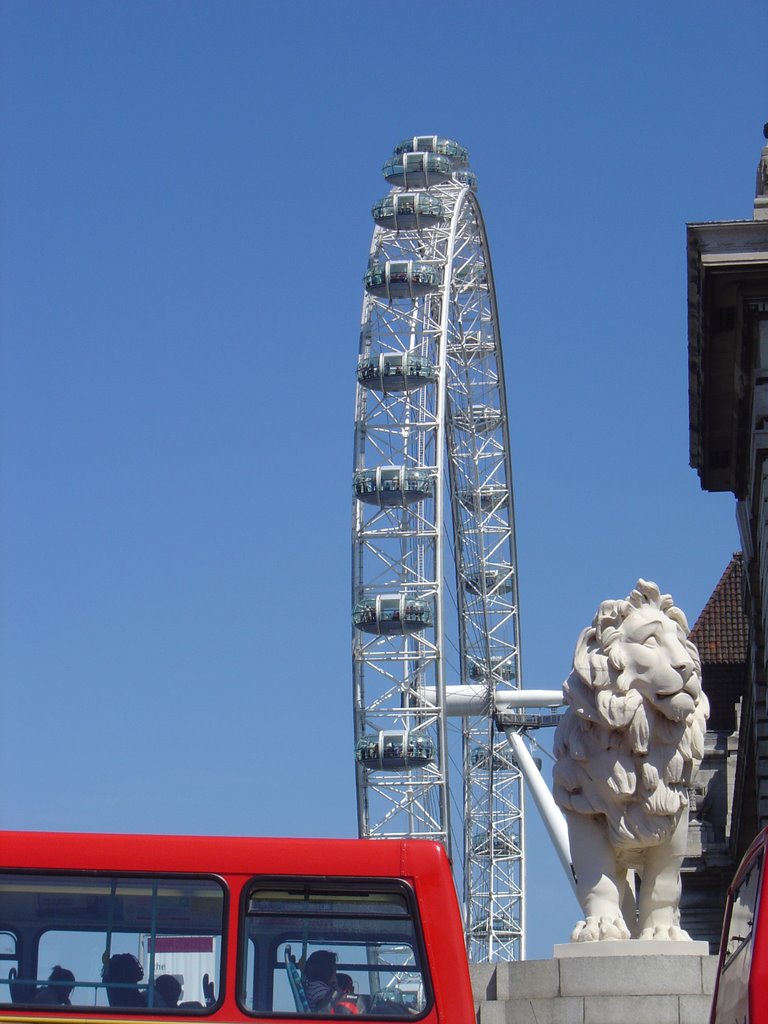
PS The photo was from my IMO day trip, taken on the Albert Embankment, where I also saw (but stupidly forgot to take a photo) Met Police officers on mountain bikes practicing cycling down stairs, to the bemusement and delight of passing Japanese tourists.

Saturday, June 3, 2006

Official charity plug: "Walk with a Rose"

The observant would have noticed the "official charity" bit I added to my sidebar last week. The curious might have asked "Walk with a Rose, what's all that about?"

"Walk with a Rose" was set up in my home town, Canberra.

It is an eight-week long walk from Brisbane to Canberra by Amy Banson to raise awareness of, and money for, acquired brain injury (ABI).

ABI refers to any brain injury acquired after birth, usually as a result of an accident.

It can result in symptoms such as memory and concentration problems, dependency, irritability, poor problem solving skills and depression. These may be mistaken for being lazy, childish or just hard to get along with.

What's important to realise is that people with a brain injury might exhibit no physical symptoms and still be unable to work or look after themselves.

The short of it is, over 340 000 Australians have an acquired brain injury, of these over 160 000 need daily assistance in living.

The majority of these, even the most profoundly disabled, will be cared for by loved ones at home.

Obviously, carers need a break, and there's a lot that could be done to expand respite care provision - especially at the best facilities that can offer Australians with brain injuries a genuine holiday themselves.

The aim of Walk with a Rose is to raise money to help pay for new facilities at existing respite care centres so more carers can get a break.

The walk's already attracted corporate support from ACTEW/AGL in Canberra and the endorsement of the National Brain Injury Foundation.

So if you were thinking of giving something to charity in the near future,
do consider the "Walk with a Rose" campaign.

More details and on-line donations at: www.walkwitharose.com.au.

Saturday, May 27, 2006


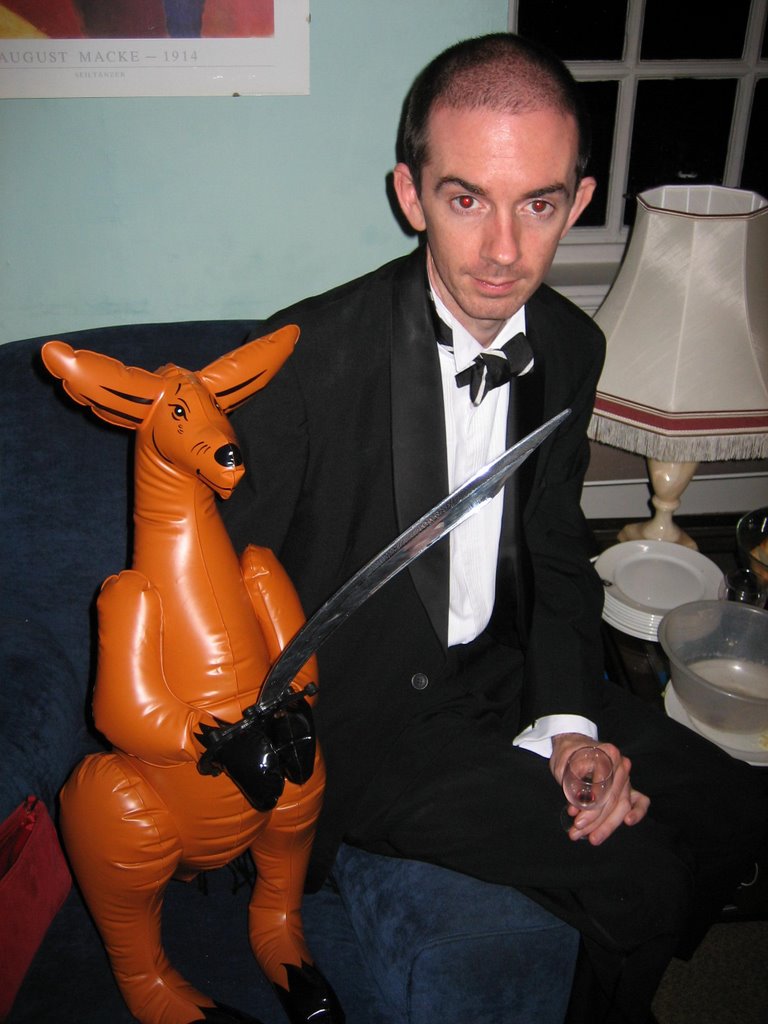
An international lawyer and his pirate kangaroo.

Monday, May 15, 2006

Stumped!

Something of an inglorious start to the cricket season.

There is an unfortunate assumption in England that all Australians know how to play cricket. Fortunately for me the standard for entry into the Trinity Hall graduate cricket team is: “Have you eve caught a moving object?”

In the sense that it is vital a team have an eleventh man to be allowed to play, I am vital.

In fairness, I’m not a bad fielder. Not a particularly good one either. I can’t bowl, and can generally just about block a ball with a bat. My best contributions are probably made in close proximity to the score-board, or zealously guarding the boundary line from balls that slip past the inner ring of fielders.

Still, I like the standing about out doors, the occasional running, the ebb and flow of the game and the really devastatingly excellent afternoon teas put on by our MCR stewards and treasurer and usually billed as “as big as the whole world!”

Which would be true, if the world were made entirely of cucumber sandwiches, strawberries and cream and Pimms mixed according to our treasurer’s secret recipe.

So you’ll imagine things are looking a bit grim if I’m sent in to bat. In our first game Sunday against Churchill college, we bowled first and were set a chaseable target of 122 from 20 overs.

Unfortunately, we suffered a bit of a mini-collapse, and while the run rate was on target, we were going through batsmen.

When I was one of the last three on the bench I headed out to the nets for a warm-up.

Ludicrously, my legs were too thin to do the pads up with the Velcro and I had to tie the straps in a knot. Still, I had fun in the nets, and by the final over was never expecting to hear the call.

Then, on the third ball of the final over we lost a batsman. The score was 121. One run to tie, two to win, three balls remaining as I trudged out to the pitch.

Our penultimate batsman was facing the bowler. With three balls left, I figured anything he hit might require running. So I edged forward from my crease, sort of forgetting it was his job to call the runs.

A nice straight block sent the ball back down the pitch towards me, where a quick-witted fielder took it, saw me out of my crease, and pegged it at the stumps.

A lunge with my bat was, lamentably, not enough to save my ignoble 45 seconds on the pitch.

Still, at least everyone on the team – and I do mean just about everyone – was courteous enough to think the result close enough that it was some decisive personal contribution of their own that had sealed the defeat.

A good game though, and a great result for Churchill who were so short of players last year that I was sent in to bat for them …

Friday, May 12, 2006


Why have I not been blogging of late? Well, frankly the weather has been too good. I've been trying to work dilligently through to the early afternoon (a point between 3 and 6 pm depending on the dilligence and virtue of friends) and then hit a beer garden.

Anyway, mostly for my mother I've put some photos of the flowers and blossom where I live under 2006 Spring at Wychfield.

Now, if you'll excuse me, I have to prepare to give an international law tutorial on the lawn outside ...

Monday, May 1, 2006

Darfur: background to the conflict in the Sudan

The high-water mark for peace prospects in Sudan probably came in 2004 with an agreement between the UN and the Sudanese government that it would disarm militias and facilitate humanitarian aid efforts. Eventually, 2000 African Union troops were deployed to the Darfur region. However, peace talks between the government and the two rebel factions (the Movement for Justice and Equality and the Sudanese Liberation Army) have consistently stalled over disarmament.

Two years of hand-wringing later and the UN has managed only limited sanctions against Sudanese leaders and a referral of the situation to the International Criminal Court. The ICC, of course, will not be able to act until after the dust has settled – having no power or ability to swoop in and seize suspects.

The stalemate arises from the fact that the Sudanese government won’t allow UN peacekeepers in until a peace agreement with the rebel factions has been signed.

According to the New York Times, the UN Security Council doesn’t want to send a force in as a compulsory measure under Chapter VII for a number of reasons. First, China and Russia would not support such a move. Both China and Russia have strong economic links with Sudan, especially China which accounts for 64% of Sudanese exports and 10% of its imports. Second, there has not exactly been a rush to volunteer peacekeeping troops by the international community.

But what are the origins of the conflict? Typically, the Guardian has an excellent interactive timeline and Le Monde has quite a good summary of more recent events.

Sudan is ethnically, religiously and linguistically divided between a predominantly Arab/Muslim north and an African/Christian (and Animist) South. In Darfur province in the Northwest the janjaweed militia (basically government proxies) have been attempting to drive out ethnic Africans. There are many internally displaced persons as a result, and many international refugees who have crossed into Chad.

The situation has certainly heightened Chad/Sudan tension, with both sides accusing the other of supporting anti-government rebel groups within its territory.

While there were Christians in the Sudan area in the sixth century, the present conflict probably has nineteenth century roots. In 1882 a rebellion expelled Egyptian and British colonial rule and established a strict Islamic state; the rebellion was only suppressed by the colonizers in 1889. Sudan was then jointly administered by Egypt and the UK until its independence in 1956.

Promises of self-rule for the south within a federal system were reneged upon by the new independence government sparking civil war from 1955 to 1972. The war was rekindled in 1983 following the imposition of Sharia law on non-Islamic people in the South. Another possible reason for the central government’s reluctance to relinquish any control of the South is that it holds 75% of Sudanese oil fields.

That said, the present rebels in Darfur (the northwest) are a somewhat separate issue from the old North-South civil war, except insofar as the conflict has clear ethnic overtones with Arab militias (backed by an Arab government) attempting to displace the African locals.

Sunday, April 30, 2006


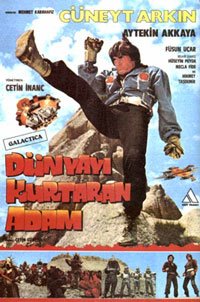
Turkish Star Wars

Allegations of copyright infringement in popular culture are ever with us. The basic idea behind copyright being that you can't copyright an idea, only a reasonably detailed and concrete expression of an idea.

This is the most obvious reason the Da Vinci Code case failed: the idea that Christ may have married Mary Magdelene and fathered a line of French kings, while certainly not first Dan Brown's, was scarcely an idea subject to copyright.

Those who did undergraduate intellectual property, however, would probably remember a classic case falling the other side of the line - the Italian re-make of "Jaws". This resulted in the Australian case Universal City Studios v Zeccola, where it was held (for the purposes of an urgent injunction) there was an arguable case of copying.

The judge at first instance, in the words of the appeal court, "with some
degree of fortitude, viewed both films, one after the other
" before ruling for the makers of "Jaws".

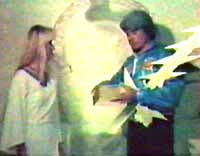
With considerably more fortitude I settled down to watch "Turkish Star Wars", perhaps one of the best bad foreign films imaginable. Actually, it's so bad as to be beyond imagination, so just go watch it - if you can find a copy, which will be hard for reasons I'll mention later.

The titles alone say it all. Some of them are visibly painted on cardboard and "faded out" by the simple expedient of rushing them towards the camera and off to the left.

It begins with a monologue that's incomprehensible, even with the aid of subtitles, uttered over a backdrop of footage of early NASA launches and random bits of Star Wars space-fight footage mashed together. Unfortunately not enough footage, so what they have they loop three times (a money-stretching trick this production crew ain't too proud to use over and over again).

We then have fighter pilots, who appear to be standing either in front of TV screens or a back projection of more Star Wars space-battle footage, in motorcycle helmets.

Our heroes are then shot down and land, apparently, on the evil over-lord's planet. They must defeat him before he can penetrate the shield of projected brain-molecules that defends the earth. (At least I think that was what was going on.) Along they way they must save the oppressed locals from his evil army of chubby skeleton warriors, dudes in halloween masks, mummies, guys in tin man costumes, giant muppets with bad claws, and an eight foot yeti thing that seems to flail victims to death with streamers.

Moments to watch for:

- crashing your space-fighter in such a way it disintegrates, but you crawl from a sand-dune unharmed!

- kicks that land nowhere near the bad-guys but send 'em sprawling!

- "Ouch, that hurts!" moments when it becomes painfully apparent there are no stunt doubles

- when care bears attack! Men in giant pink bear suits attack children with their cardboard claws!

- a devastating mystical sword, obviously made of cardboard and shaped like lightning!

- our hero, trapped and bound to feindish devices by ... telephone cords!

- evil sorcerous villains, drinking their victim's blood through a bendy straw!

- that yellow, swirling special effect: when it turns up, it spells trouble!

Best of all, when the evil villain is sliced in half: "This is one of the more tricky visuals from the Turkish effects wizards: he is filmed while one half of his body is in shadows, then they go to a shot of him with the other half of his body in shadows. It seems impossible, but both halves of him ended up with his whole nose."

The reason you'll have trouble tracking this gem down? In a delicious result for a film made with no concern for copyright (it's soundtrack is composed of scraps from Indiana Jones and Flash Gordon, too) it is only available on bootleg DVD ...

Monday, April 10, 2006

Oh Canada!

Presently in Vancouver, staying with M and K. I arrived at the end of quite a long journey that started at 5 am in Philadelphia (or 2 am Vancouver time) and ended with getting into Vancouver on a bus from Seattle airport after 6 pm. Much cheaper, though much longer, to cross the border by land if you can afford the time.

Other than catching up with old friends, indigenous art has featured pretty high on the agenda. The Anthropology Museum has an astonishing collection of memorial (ie burial) boxes, door posts, potlach masks and totem poles. The symbolic depictions of real and mythical animals are enormously striking. Also, fortunately for my white middle-class guilt complex, they seem to have a very healthy relationship with the local first nations at the Museum; so these artefacts are largely voluntarily placed with the museum, not a monument to looting.

I've also rapidly come to appreciate Vancouver fashion sense. It rains a fair bit here and winter is long. Aboout 97% of people outdoors are wearing jeans and sneakers and either a North Face fleece or a waterproof jacket of some desciption. The other 3% are wearing jeans, black boots or slip-on leather shoes/clogs and a quilted jacket.

No wonder everyone can pick me a mile off as "visiting" in my jeans with (shock!) a red wool jumper and tan linen jacket.

Still, M and me were mistaken for a gay couple methinks by a couple of private gallery owners when we were wandering around town this afternoon. Quite amusing to be treated as serious potential buyers. Especially on my income.

Philadelphia

My time in Philly was also brief, but well spent. Major highlights of my stay with Im the archaeologist were the local Art Museum and the Liberty Bell centre. Sorry, "center". The Musuem is a gobsmackingly impressive pile built along late-Roman empire lines, with a healthy dose of ziggurat thrown in for good measure.

The main foyer looks like the steps could comfortably lead off to an area reserved for human sacrifice, but is dominated by a huge sculpture of Artemis (or Diana or some other Roman goddess with a bow) who apparently used to be a weather vane. Weighing, I would guess, a good half a tonne. Always important to know from which direction your hurricane-force winds are blowing.

In a lovely counterpoint, a huge white Alexander Calder sculpture hung from the ceiling. I dragged Im through the French Impressionists, she gave me the medieval high-lights tour and showed me where bits of Thai and Chinese temples, along with European monastic courtyards and Japanese tea-houses, had been artfully reassembled. (Hurrah for looting!).

The Liberty Bell exhibit was really well thought through, and a good introduction to the history of the object. Among other things, I learned that it was only renamed the "Liberty" Bell when its symbolism was taken up by the anti-slavery movement.

It also struck me, for the first time, that the opening paragraphs of the declaration of independence are actually a brilliant exposition of the principle of self-determination at international law as we now understand it. (Well, more or less.) Hardly surprising, given that it was drafted by so many lawyers.

Right, nap time.

Monday, April 3, 2006

Taking international law on the road

Spring had finally sprung in Cambridge on the Thursday of week before last. I could cycle without gloves and beanie, the daffodils were out and so, increasingly, was the sun.

What a fool I was to think that was Spring.

I'm currently blogging from a front porch in Washington DC, where it's been positively balmy since I arrived. Sunny, 20 degrees plus, and blossom on all the trees. There has been one - ONE! - cloudy day in the week since I arrived.

I need to move back to a warmer climate.

Anyway, blogging has been interrupted by the madcap antics of the American Society of International Law annual conference and my research trip. Okay, so "madcap antics" really doesn't describe ASIL.

Like any conference there were amazing, stimulating and thought provoking panels; and those that left you asking: "How the hell did you get invited to speak?"

I also had a great two-hour meeting at the State Department today about international fisheries law. (Tomorrow I talk about drug smuggling with the Coast Guard.)

Still, the real experience has been staying with friends in Washington DC's north-west. Over here, near T and 5th, my hosts are among a gentrification influx. The neighborhood around has a fine heritage, but not perhaps the best track-record on safety and criminal behavior. (One of my hosts has been mugged, late at night, on his own doorstep).

Basically, when walking around here you're liable to be the lone white guy: certainly a different feeling for me to be part of a visible minority. Once you cross 13th street though, the racial balance visibly shifts - and by the time you hit Georgetown, there are almost no black faces.

Still, even as the hopelessly naive gangly white guy off to a conference or meetings in a tie and suit jacket, I've felt quite at ease. Everyone is terribly friendly and helpful.

Okay, a nasty storm is breaking. Time to take this indoors and off-line.

Blogging will be pretty erratic over the next two weeks. Next stop: Philadelphia!

Tuesday, March 21, 2006

Lawyers, wildlife and metaphors

Funniest opening for a professional article I’ve read in a while:
“Most lawyers do not spend a lot of time camping in the wilderness, and probably very few have ever come face-to-face with a cougar. But confronted with that situation, any good lawyer would know in a flash that it is essential to escape without getting eaten. Risk management and goal assessment are among the profession's most indispensable skills.”

If you’ve ever gone on a hike in the States without memorising “16 different anticougar gambits” prior to departure you’re clearly not a litigator.

It’s all from piece by Steven Lubet in American Lawyer about lawyers and their excessively risk-averse and detail-obsessed behaviour, or as he puts it “cougar-spotting”.

How to tell the difference between obsessive time-wasting that pads a client’s bill, and catching the trick that’s going to cost your client a bundle?

Where a safety-first mentality has become redundant is clear in “over-lawyered” contractual clauses using every possible synonym for debt.

(“Hey Tony. This wise guy says because his contract wit’ us covers ‘arrears, bills, checks, chits, claims, commitments, damages, debentures, debits, dues, dues, incumbrances, invoices, liabilities, manifests, mortgages, notes, obligations, outstandings, receipts, tabs, tallies and vouchers’, his ‘gambling markers’ are excluded. Whaddya say?”)

The ordinarily useful attention to detail is demonstrated by a, for example “a ‘risk of loss’ provision [in real estate transactions], in case the property burns down between the contract signing and the closing date. That doesn't happen very often, but it's a cougar when it does.”

But then we have that fabulous anecdote, the one time payoff that justifies (or provokes) a lifetime of obsessive behaviour:
“A litigation partner at a large Chicago law firm told me that he always personally examines the handwriting on the significant documents in his cases, whether or not there is an allegation of fraud. That may seem pretty aggressive (and time-consuming), but he once noticed that two signatures-one on a letter and the other on a promissory note-seemed virtually identical, down to the last squiggle. Consulting a handwriting expert, he learned that no two signatures are ever exactly alike, unless one has been copied or traced. And sure enough, it turned out that a crucial letter had been forged. That successful bit of cougar hunting saved his client a couple of million dollars, and he has been diligently comparing signatures ever since.”

That’s why you’d hire a corporate lawyer, and why many sane people aren’t interested in being one. (Why didn’t the client notice the damn forgery?)

Still, it exemplifies nicely the trust no-one mentality of many law firm partners.

Monday, March 20, 2006

Why do women leave law firms?

A recent NY Times piece is asking the right questions, but is frustratingly slim on answers.
“People explain it simply as the fact that women have children, but so many other factors play into it … ”

Great, what are those factors? Well, they mostly seem to be poorly defined and explored intangibles.

The “roadblocks” seemingly include “errant mentoring, opaque networking opportunities, low-grade case assignments or arbitrary male control of key management committees”.

But then we’re back to discussing the:
“ ‘maternal wall’ on female lawyers … built on the unstated assumption among male partners that women who return to firms after having children will automatically be less willing to work hard …”
Okay, accounting firms apparently do better:
“Deloitte & Touche … has promoted and retained women by offering flexible working schedules, leadership development and career planning programs, and transparent and dedicated mentoring ... Deloitte also maintains generous sabbatical policies and outreach practices so that women who depart the firm to raise children have an easier time re-entering the work force — and rejoining Deloitte — when they are ready to do so.”
This sounds great, but is not explored in any more detail. So what’s the bottom line problem with law firms? Billable hours. Quelle surprise.
“Research … has also identified an inflexible, billable-hours regime as an obstacle to job satisfaction for both sexes, a trend that is more pronounced among the most recent crop of law school graduates.”

“… analysts says [billable hours are] increasingly cropping up as an issue for male lawyers as well ... Billing by the hour requires lawyers to work on a stopwatch so their productivity can be tracked minute by minute — and so clients can be charged accordingly. Over the last two decades, as law firms have devoted themselves more keenly to the bottom line, depression and dissatisfaction rates among both female and male lawyers has grown … many lawyers of both genders have found their schedules and the nature of their work to be dispiriting.”

Try downright depressing. One female colleague described her first two years in a law firm as “monkey work”: an intellectually unexciting hard slog a chimp could perform.

But wait, suddenly the key problem isn’t gendered? It’s just billable hours? At some levels this seems plausible, but only if you assume some men simply don’t notice not having a life beyond work, and hence more men stick around to make partner.

So, how did one successful two-partner marriage balance work and family, especially with one child with a learning disability?
“[They] engineered this by cutting back on their social calendar, sharing household chores and making sure that at least one parent was home for dinner most nights.”
Good on them for making it work, but forgive me if I think this vision of an absentee household staffed by help and family seems a bit grim. Yet this is the best life in a law firm can offer.

One quote that really rang true?
“Law firms like to talk about running the firm like a business … but they’re running on an institutional model that's about 200 years old … Most law firms do a horrible job of managing their personnel, in terms of training them and communicating with them.”
Indeed, their sink or swim mentality coupled with a business model that assumes a 30% staff churn rate has little need for retention or engagement with its “fee earners”. The day firms acknowledge they have an actively failing human resources model is the day any of this may change, for men or women.

Saturday, March 18, 2006

A hard week’s dining

Looking back over my blog, I’ve had surprisingly few entries about black tie dinners. Then again, even in the course of the usual end of term madness I’ve seldom been out to this many formal dinners.

The dining score-card for 8 to 15 March 2006 would read:

Total number of dinners out: 5, of which three were black tie dinners (one with academic gown), one with suit and tie, and the last a quite dinner with a mate.

Looking back, I came out of the gates too fast.

At the last “regular” grad hall of term on Wednesday the 8th, I had two friends come along from the Blind Wine Tasting Society. We rather lost sight (ha ha) of the fact that “blind tasting” is meant to be about sophisticated wine appreciation – not getting, well, blind.

Three people, four bottles, multiple car pile-up of hilarity ensues - lasting until 3 am that morning. My hangover, however, lasted much longer.

After a brief respite, on Friday it came time to dust the lapels of my tux, sponge the mud from the inner leg (didn’t I dry-clean this last time? no matter) and trot off to the undergraduate law society at St Catherine’s College annual dinner.

The observant will have noticed I am neither an undergraduate nor at Catz.

I was invited by my students as an external supervisor. I was touched to be asked, but flattered when I realised how few “externals” get invited to a lovely dinner for only about 30 people.

I could only suppose that to be invited you had to be regarded either as important or cool. As I’m not even remotely important, it seems my teaching style may have rendered me popular. A theory confirmed by being one of only two or so “oldies” encouraged to head over to the Catz bar afterwards – which mercifully had stopped serving alcohol.

Saturday saw me hand washing my one formal shirt and heading off to the feast of St Edward King and Martyr – yes, really – at Trinity Hall. This was my college’s thank-you dinner to those who’ve supervised (tutored) Hall students over the year. Three courses (including a fabulous saddle of Spring lamb) with wine, a cheese course, a digestive break where you stand and go into another room, then chocolates and fruit with claret, dessert wine port and coffee.

Afterwards the remainder of the wine, along with scotch and, oddly, beer was on offer in the Senior Combination Room – and it was good scotch.

Highlights of the evening included finding myself chatting with real enthusiasm about how my students were getting on, and the odd jibe about having been one of the elect invited to the Catz dinner.

Tuesday I headed out on the town with a friend who’s been to busy helping to write a UN report on top of her PhD to be seen much this term. After a decent dinner at the chain bar “Bar Ha Ha”, we repaired to the bar at Trinity Hall for our second bottle of vino and law chat.

Which kept me nicely in form for the black tie graduates end of term dinner at Trinity Hall on Wednesday, at which I neither drank excessively nor stayed out too late. No, really.

Anyway, so much to say that if I haven’t been blogging, it’s because I’ve been too busy eating.

Thursday, March 16, 2006

When the West Wing Fails You

Other than the odd burst of mindless flag waving, I love “The West Wing”. So, I was sitting down watching season four tonight, the episode where they decide – a little belatedly – to take legal advice on the consequences of assassinating a terrorist leader.

A terrorist leader who also happens to be an accredited diplomat to the US.

The discussion runs something like this.

President Martin Sheen: “Article 51 of the UN Charter allows a nation to wage war in self-defence.”

Lawyer: “The article is predicated on openly declared wars.”

Pres: “The world doesn’t work like that anymore.”

Lawyer: “The law does … this could be a war crime.”

No, no, no, no! Bad Aaron Sorkin, bad bad man!

Admittedly, I just supervised undergrads on this stuff, so maybe I have a bee in my bonnet.

Anyway: the UN Charter does not require declarations of war. Article 51 does not even mention war. It talks of an “inherent right of … self-defence if an armed attack occurs.”

Can you claim self-defence against terrorism? Well, it’s controversial. But I’d say after the Security Council in Resolutions 1368 and 1373 recognised the US’s right to act in self-defence following September 11, the answer has to be “yes”.

How far that right extends is a question for another blog.

The idea that law is graven is stone, anachronistically resistant to change and irrelevant to current concerns is also wrong. There is some scope for progressive re-interpretation of the Charter’s meaning in light of subsequent practice.

For example: there is, strictly speaking, no “veto” in the Security Council under the Charter. Certain votes require the “concurring vote” of all five permanent members. So there's at best a default veto: even an abstention by a P5 member should torpedo a motion requiring a “concurring vote”.

In practice, only express negative votes are counted under this rule and a blind eye is turned to abstentions. Despite the words plain meaning, their legal meaning has changed through their use in practice.

So, similarly, there’s nothing stopping the content of the words “self-defence” evolving over time.

So is such an assasination a war crime? Whether civilian leaders are legitimate military targets in a war is a debateable issue, as is the application of the law of armed conflict to a war on terror.

However, assassinating a diplomat returning to his own country is, one would think, rather against the spirit of the Vienna Convention on Diplomatic Relations.

For a usually relatively intelligent show, sloppy errors teenage delegates to a model UN should be able to pick up.

Sunday, March 12, 2006

Only in the UK ...

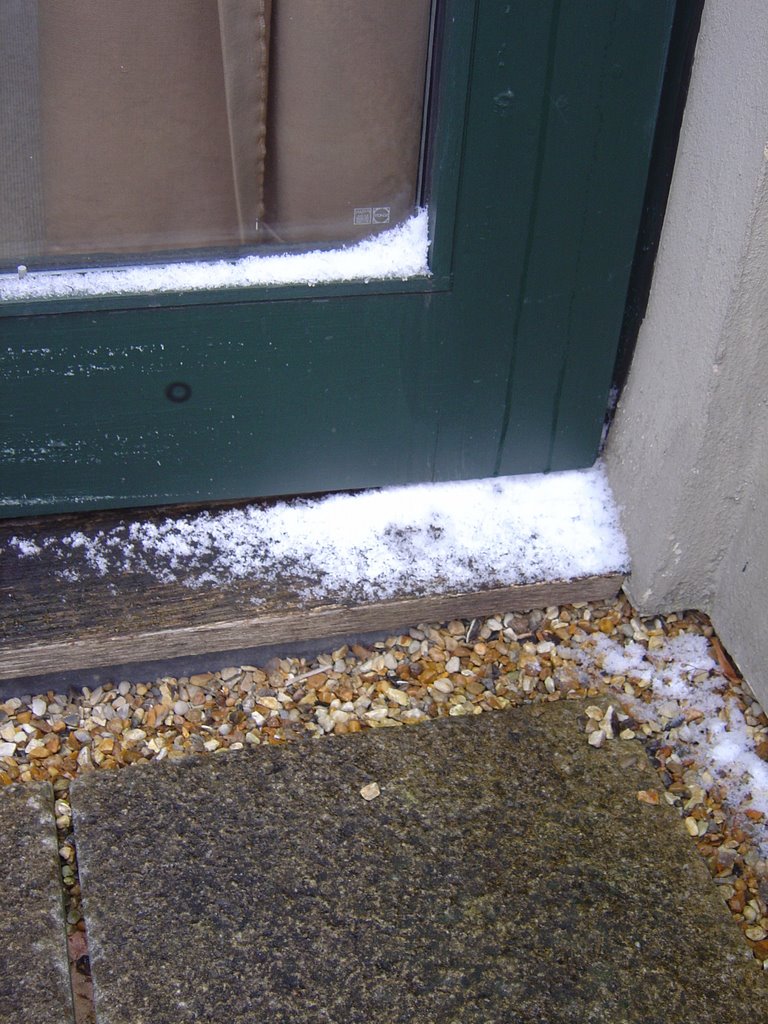
I am a big fan of BBC weather online. However, only the UK could need an icon for "sunny intervals with scattered snow."

Which was the weather Thursday before last: hence the photo below of my outside door.

Snow in March. Damned British weather.

Thursday, March 2, 2006

Great powers and legal subjects in the making of counter-proliferation law

It seems the nuclear club just got bigger. Certainly, India’s had nuclear weapons for years and has stood deliberately outside the NPT system. However, the Bush administration’s effort to accommodate its civilian power program in exchange for it being quarantined from military research and subject to IAEA safeguards is an interesting step towards containment and tacit acknowledgement of nuclear power status.

In part, the US is probably interested in seeing India (the world’s largest democracy, after all) become a counter-balance to China. What I’m interested in, though, is what the non-proliferation tells us about the structure of power in current international legal relations and law-making.

Gerry Simpson’s argument in his excellent Great Powers and Outlaw States is that the great powers adopt an approach to international law based on whether they think their power is waning or still growing. Those that are aware their era may be passing will favour a rules based system that attempts to cement their current position in place. This was the United Kingdom’s aim in negotiations over the UN Charter. The Security Council was a deal between a declining great power (the UK) and two still-rising great powers (Russia and the US). France and China were added essentially as afterthoughts: China in particular as a regional balance against Japan.

Thus, it is scarcely surprising in an era when the US feels its power to be in the ascendant it’s academics, politicians and policy-makers often seem impatient with current international law and want to push the envelope (far more so than their diplomats and generals). Meanwhile European powers cling to UN procedure as the touchstone of legitimacy. It was ever thus.

Simpson also puts the point that great powers politics usually results in several tiers of international rules. Roughly speaking, the great powers claim certain privileges or exemptions not available to others, the mass of law-abiding or “civilized” States live within the constraints and protections of the law, while demonized “outlaw” States are denied the protection of the law but are also subjected to an intensely discriminatory regulatory law (sanctions).

How does this play out in counter-proliferation? While there has been much talk of the US “hegemony” or a “unipolar” world, I do not think the US is claiming any special privileges as a sole super-power. Despite the rhetoric of the “war on terror” the US has not been prepared to claim unique rights only it may exercise, or declared a unilateral policy of great-power intervention (à la the Brezhnev Doctrine). Iraq looks increasingly exceptional: the final chapter of a previous era of intervention, not the herald of a new dawn of global regime change. It is an exception that proves no particular rule.

The US is acting, in fact, far more like a great power in a phase of consolidation rather than expansion. Like a consolidating great power it is interested in creating new, and discriminatory, legal structures that favour its position.

It does not openly disclaim that it is a subject of the law, but it is far more interested in being the first-among-equals within the club of law-makers. Legislators can make laws that apply equally to all, but will never realistically apply to them. “The law in its majesty forbids both rich man and poor man from sleeping under a bridge.”

It wants a system that preserves WMD among a club of “responsible” weapon holders and that prohibits others from obtaining them. Logically, this now dictates either sanctioning India, or brining it further into the fold. India, for its part, may finally have stepped closer to the seat at the law-making table it’s been after.

Next: the law-making club and the unequal international law of non-proliferation.

Monday, February 27, 2006


Only the finest in non-lethal weapons ...

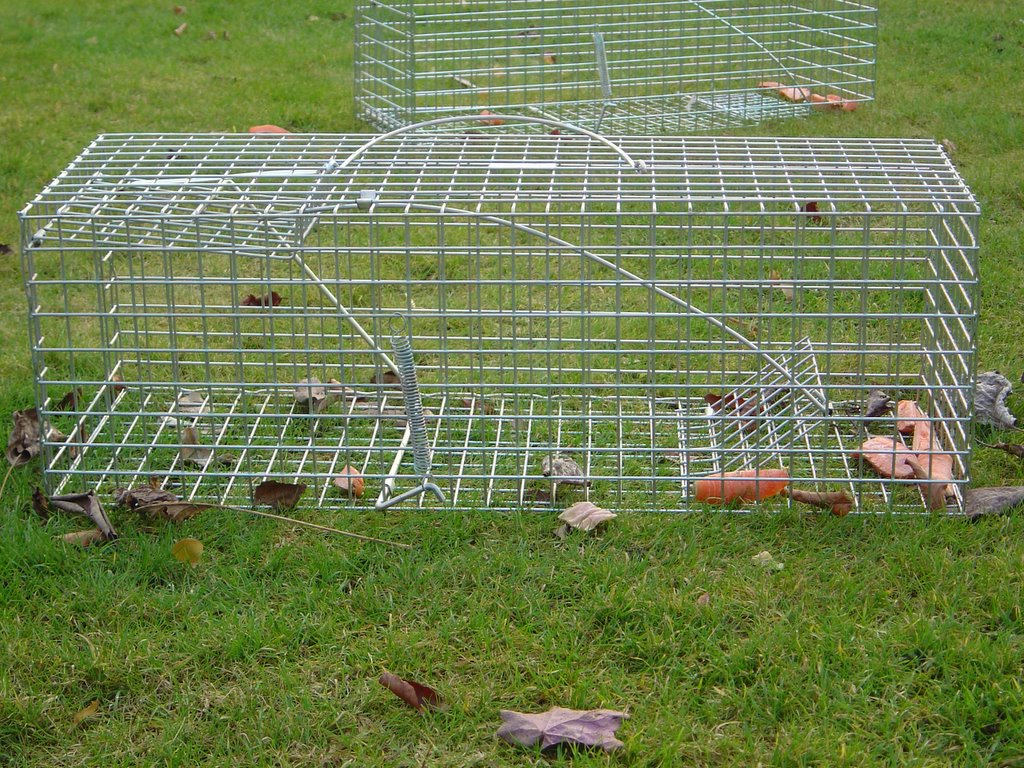
Rabbits appear to have been troubling the gardeners where I live. The answer? These cute little (and, after one week, seemingly entirely ineffective) non-lethal rabbit traps.

The idea is that the rabbit is lured in by the tasty carrot, stands on the elevated ramp to get at it, the ramp then falls, in turn pulling the the pin holing the door open - and voila, caged bunny.

Shame the rabbits don't seem to like 'em and that the wind seems able to blow the doors shut ... I re-set one of them myself for this photo.