Thursday, February 2, 2006


Big, ugly and very valuable: patagonian toothfish

People might remember the embarrassment for the Australian government, when the crew of the Viarsa 1 went free in November 2005 after being acquitted by a jury in Perth of illegal fishing in the Australian Exclusive Economic Zone off the Heard and MacDonald Islands north of Antarctica. It was the crew’s second trial, the first being abandoned when the jury failed to return a verdict. In the meantime they’d spent two years living in seaman’s hostel in Perth.

So, what’s all the fuss about fishing in Australian Antarctic waters?

Well, for a start the toothfish are supposed to be managed under the Convention for the Conservation of Antarctic Marine Living Resources 1980 (CCAMLR). While not being endangered, they do take 10 years to mature and over-fishing risks taking juveniles before they can breed.

Secondly, it’s big business. These are big fish (they can grow to over 2 metres) and the meat is worth a lot in US ( where it is sold as “Chilean sea bass”) and Japanese markets. The economics of their over-exploitation is remarkable.

Treves has succinctly describes the “common pattern” of IUU (illegal, unregulated and unreported) fishing for Patagonian toothfish in the CCAMLR area:
Fishing vessels flying various flags and most often involving Spanish interests … engage in long-term fishing cruises in the waters of the Southern Ocean. The wealth of the fish – especially Patagonian toothfish – in the vast expanses of the Southern Ocean, and the relatively remote chance of being caught while fishing in the economic zones of France (Kerguelen and Crozet Islands) and Australia (Heard and McDonald Islands), are the main attraction for such expeditions. The financial stakes are considerable, given that a full cargo of Patagonian toothfish can equal or exceed the value of the fishing vessel involved.

In two cases before ITLOS (the International Tribunal for the Law of the Sea) this proposition has been starkly demonstrated. When the Monte Confuco was seized by France the evidence before the Tribunal was that the vessel was worth $US 345,000 while its cargo of toothfish was worth approximately $US 1.5 million. When the Volga was seized by Australia the vessel was valued at $AU 1.8 million, and its cargo of toothfish was sold at tender for $AU 1.9 million. (See Tullio Treves, “Flags of Convenience before the Law of the Sea Tribunal”, 6 San Diego Int’l L.J. 181 (2004-2005), 181-2).

However, law enforcement in this part of the world is hard. It’s extremely remote and inhospitable environment with weather conditions often making boarding vessels dangerous, if not impossible. It’s no coincidence that most Australian boardings of vessels found fishing illegally have usually required military assistance and boarding by fast rope from Navy helicopters.

Some of these cases often involved lenthy hot pursuits in difficult and dangerous conditions: the South Tomi was pursued for 15 days across 3,300 nautical miles, while the Viarsa pursuit lasted 21 days and covered 3,900 nautical miles. Third States provided military assistance the eventual boarding of both the South Tomi (South Africa) and Viarsa (South Africa and the United Kingdom).

Thus, Australian experience suggests IUU fishing vessels are willing to go to significant and dangerous lengths to evade capture and are often under instruction not to surrender to law-enforcement vessels unless absolutely necessary. The risk-taking appears to be related to the potential economic gain.

It has been said that the profits to be made, given that only one or two voyages may be needed for a significant return on the cost of the vessel, make IUU fishing for toothfish potentially more profitable than drug or people smuggling (see Baird, “Coastal State Fisheries Management”, (2004) 9 Deakin Law Review 91).

This has driven Australia to described the practice before the CCAMLR annual meetings as “a highly organised form of transnational crime”.

Indeed, when Australia stopped the Lena and the Volga on the same day, it appeared that the two vessels were in communication and Australia led evidence before ITLOS that suggested these two Russian-flagged vessels were part of a larger IUU fishing fleet owned by one family through a company in Jakarta (see the Volga Case transcript, ITLOS/PV.02/02, p. 28 at ITLOS).

It just goes to show if there's enough money in it, there's nothing disorganised about crime.

Sunday, January 29, 2006

The Palestinian election

For what little my opinion is worth: I think the Hamas election victory could well become a step forward for peace in the Israel/Palestine dispute. I think Israel and the west will have no choice but to negotiate with the “Change and Reform” parliamentary party, and I think a new breed of Hamas politicians will have to distance themselves from terrorism and the core aim of the destruction of the Israeli state.

I am not about rewarding suicide bombers here, merely making a pragmatic prediction. Once Hamas has to govern, once it is responsible for tax collection, spending aid money and the day-to-day governmental grind of providing roads, water and schools – it is going to have a much harder job selling itself to its now (greatly enlarged) core constituency. Government involves compromise and the experience tends to soften radicals.

Hamas was not elected, it would seem, by a newly radicalised Palestine. It won as most oppositions do: because people were sick of the incumbents. These are not electors who will be impressed by renewing the insurgency against Israel: they want a functioning economy, basic services, and freedom of movement through Israeli managed checkpoints. Those will be the yardsticks of Hamas’ success or failure now: not its ability to cause bloodshed.

It will be in the new parliamentary Hamas members’ interests to clamp down on militarism or distance themselves from it. If they want international credibility and the aid money that goes with it, they’ll have to.

Further, Israel is still the occupying power throughout much Palestinian territory and is thus responsible for basic services. Getting the occupying power to fulfil its obligations means negotiating with Israel, which some Hamas leaders already do.

On the other side, if Israel wants security in its own borders, it has to solve the Palestinian question. And if it won’t negotiate with Hamas who will it negotiate with? Permanently closing the border and leaving the Palestinian economy to (further) stagnate and the Palestinians to starve isn’t a realistic option. Which means refusing to talk to terrorists isn’t an option: though it may be a tactic to try and wring concessions from Hamas about a strengthened cease-fire and modifying its charter goals.

A Hamas parliamentary wing, let alone a government, gives the international community significant leverage to hold the militants to account. The difficulty will, of course, be in how all players manage any splinters of Hamas who inevitably decide in coming months and years that the parliamentary wing are ‘sell-outs’ and go it alone.

Thursday, January 26, 2006

Cime of the day

An exercise of universal jurisdiction is where a State makes it a crime before their courts for anyone, anywhere to commit a certain act. With this in mind I found the following passage drily amusing:

"... in United Kingdom law universal jurisdiction is asserted in sections 47 and 51 of the Anti-Terrorism, Crime and Security Act 2001, in respect of the offence of knowingly causing a nuclear explosion without authorisation. The Rule of Law is a wonderous thing."


(See Vaughan Lowe's chapter on "Jurisdiction" in Evans (ed), International Law).

Tuesday, January 24, 2006

"Clearly an act of stupidity"

One of the more bizarre local crimes to have been committed recently in Cambridge involves posting a hamster.

A couple of undergraduates living not that far from me decided to post a hamster in a bizarre act of revenge to a man who they claimed had threatened one of them. Apparently, after there had been complaints about a man loitering about their college (on one report kerb-crawling and abusing students) the pair had tailed a suspect home and become embroiled in an argument.

The reason given for such an idiosyncratic revenge:

"to cause confusion - I suppose to make him look after it".

That and they claim to have been "plastered" at the time.

The hamster, subsequently called "First Class", was saved from death by mail-sorting machine through the attentive intervention of a postman. The pair were found guilty of, and fined heavily for abandoning an animal in circumstances likely to cause suffering.

In a statement reproduced in student papers but not the mainstream media, the pair apologized but also made a comment about the the diligence of the RSPCA in securing their prosecution compared to the local police's activity to find the loitering man they blamed for their woes.

They also made a rather ill-judged comment about "society's priorities" and the number of lives that could be saved by a donation to Oxfam equivalent to the public costs incurred in their prosecution. Well quite. But hardly the kind of half-hearted expression of contrition likely to endear them to the general public, though certainly not crass enough to justify the subsequent (and cowardly) hate mail to one of their families.

Monday, January 23, 2006

Being foreign

I'd be the first to admit that Australian universities don't often do their peachy-fresh best by international students (especially given the cash they bring in) in terms of creating a smooth application process.

Indeed, now being a foreign student myself and subject to the varying whims and idiosyncrasies of Cambridge bureaucracies, I have some sympathy for the confusion and terror that can be engendered through the process of applying to study abroad.

I can even believe that there exist in parts of the world "education agents" to recommend universities to those wishing to study in Australia and who will, for a fee, guide them through the application process.

What a shame they may prove no more use in the application process than a bootful of old cheese.

From a friend working in foreign student admissions, I present the e-mail she wish she'd sent to one such agent:

"Dear Ms X,

Thank you for your utterly unnecessary letter regarding your client, Mr Y.

As I am sure you can appreciate, there are a very large number of students who choose not to complete their enrolment until the last minute. Nor is your assumption - specifically, that you are entitled to special treatment on the basis that you can operate a fax machine - unusual.

Your efforts are, however, made more unique by your timing, and I am gladdened to see that you take your responsibilities so seriously as to require urgent completed enrolments within hours of making payment. Such a keen work ethic is to be admired.

As a professional courtesy, may I take this opportunity to remind you that in the majority of efforts to increase efficiency, underlining doesn't work. This is true irrespective of how many times it is used. The same can be said of the use of an "urgent stamp". There is a well-established inverse relationship between how many times the stamp is used and how effective it is.

May I also suggest that in future, you carefully analyze where the important information is found on any given letter, and avoid marking that section with a stamp of any kind.

I would also recommend that you request from your employer that you be allowed to undertake further training in the basic functions of a fax machine. This will allow you to send each page of your faxes once, as opposed to sending the same page one hundred and fifty times.

Warm regards, etc"


Oh dear. Anyone else had their own work held hostage by the incompetence of others lately?

Friday, January 20, 2006

Jet-lag-o-rama

Sorry to have been absent a while. January ran away with me, and then became a downhill run to returning to Cambridge.

Some statistics (believe them or not!):

Total time spent in transit, door-to-door, from my parents house to my room in Cambridge: 34 hours.

Time spent hanging about at airports (Canberra, Sydney, Singapore, Heathrow), as opposed to flying: 7 hours.

Sleep gained on flight: 2 hours.

Number of movies watched: 5 ½ (Everything is Illuminated, The Corpse Bride, Must Like Dogs, The Constant Gardener, The Brothers Grimm and bits of Deuce Bigalow: European Gigilo).

Pages of international law material read on the flight: nil.

Number of sudoku (easy and medium only) attempted: 10

Number of sudoku completed: 9

Bus trip, Heathrow to Cambridge: 2 hours, 45 minutes.

Time difference between Eastern Australia and the UK: 11 hours.

Average time spent in bed before waking up desperately confused: 2 hours.

Current half-time score: jet lag – 5; Doug – 2.

Fortunately I have a weekend to get myself together before I begin supervising undergrads again on Tuesday. Shame I need to read Pinochet (No 3) in that time as well …

Tuesday, December 27, 2005


Holiday Reads, Part 3: "On Beauty"

Headline: a great talent, a little burdened by the easy cliché


I’ve been struggling to write something on “On Beauty” for a while. I think Zadie Smith is a terribly talented writer, but my response to this novel is a little ambivalent.

Let’s start with the good. Smith’s prose is exceptional. Her ear for speech and dialogue is fabulous, and her ability to inhabit the skin of a character regardless of age or gender compelling.

The story gets off to an interesting start. The Belseys are a mixed race family: Howard is a British academic living in the US who has trouble with faculty politics and thus getting tenure; Kiki is a black American woman, political rather than intellectual, and a hospital administrator. The marriage thus embodies some neat tensions of class, politics, practice/theory, and culture: boundaries the children of the marriage need to negotiate.

It is a tribute to her sympathy for her characters that despite all the stupid, hurtful and wilfully self-obsessed things Howard Belsey does, I found it impossible to entirely dislike him. Indeed, I felt a certain sympathy for him, which Smith seems to feel herself. This is pulled off not through any especially redeeming features on Howard’s part, but because (as with all the characters) when we see the world through his eyes, it is drawn so compellingly in Smith’s lush observational prose.

Also, Howard finishes the novel humbled if not repentant. Ultimately, despite all the damage done to himself and others, Howard’s acts seem adolescent rather than mercenary. He profits little by them and does not really aim to; he stumbles into things out of a failure to appreciate consequences which a man should really have outgrown by his fifties.

However, by writing in the mode of affectionate academic satire, there are ideas the Smith excuses herself from pushing further. Howard’s refusal to engage with emotion or aesthetics (he claims to hate Mozart and has founded an academic career on the idea of Rembrandt as a merely competent tradesman) comes off as wilful affectation. Rather than portray him as one “clinging to his rhetoric of disenchantment as if it were a religion” (to quote an excellent Slate article), Smith leaves Howard apparently without strong beliefs - making many of his actions seem like parts of a childish game.

More to the point, Smith creates a bevvy of interesting characters some of whom dissapointingly lapse into jargon or ultimately conform to stereotype before simply evaporating by the end of the novel. The final moments of confrontation and resolution also seem rather, well, stage-managed.

Smith has the potential to be a writer of much wider scope, and I’d hate to see her lose her warmth and humour to write “serious social novels”; but somehow when her novels come to rest on comedy and satire for their resolution it feels a little like cheating.

Sunday, December 25, 2005

Holiday reads part 2:
Brett Easton Ellis, “Lunar Park”

Headline: Beth said it best


I was keen to check out Lunar Park after it made Beth’s top 5 for 2005 and was drawing praise from other friends as well.

I devoured it over two days, and Beth’s assessment of it being by turns “hilarious, clever, spooky, then sad” is spot on.

It’s actually the first Ellis I’ve read, and the (supposedly) autobiographical introduction is an enormously witty “imitation of himself”, a stylised and at least partially true account of his rise to prominence and the “American Psycho” controversy. I’ve never had the stomach to read “American Psycho”, but trust the reviews that the film captured much of the humour and ambiguity while omitting the baroque violence.

If “American Psycho” was fundamentally a parody of the emptiness of money-obsessed big city America, then “Lunar Park” is an excoriation of the emptiness of suburbia - and a pretty compelling post-modern horror novel. The “emptiness of suburbia”, you say, isn’t that a bit trite; a little twee and “Desperate Housewives“?

It’d be a fair criticism, if this weren’t a novel first and foremost about materialistic, status-obsessed parenting and how a generation of parents driven by personal freedom are as capable of screwing up their kids as their hidebound 1950s parents. The depiction of lethargic children on a cocktail of behavioural drugs at a “rehearsal party” supervised by a paediatrician is as funny as it is awful.

(The parent/teacher night gag about appropriate ways to draw a “normal” platypus is also a small gem.)

That and it’s a novel about being haunted by the memory of your father and a seriously nasty novel you once wrote, as well as … well, the forces of supernatural evil (maybe).

It is also wildly clever. The author-turning-himself-into-character shtick has seldom been done so well, deftly manipulating the conventions of both “I-never-knew-my-father” autobiographical fiction and the straightforward small-town horror genre. (His heavily ironic disclaimer about having done no research into the “true” events of the novel is also an overdue call for a return to imaginative, as opposed to footnote-driven, fiction.)

Despite the trappings of autobiography, one is left with the distinct impression you know little more about Ellis, other than the fact he’s a damn clever writer.
Holiday reads part 1:
Sebastian Faulks, “Human Traces”

Headline: wildly over-hyped historical novel of mad-doctors, schizophrenia and evolution


Right, I’ve not read “Birdsong” or “Charlotte Gray” - which many rave about - but while “Human Traces” would comfortably fill a long weekend at the beach, it’s a trifle frustrating.

The historical detail on the origins of psychiatry as a field of study, and early theories on “mad-doctoring” is engaging. The provocative thesis of one of the central characters, the improbably named Dr Thomas Midwinter, that our capacity for language is also the origin of madness but that at one stage of (pre-literate) human development the ability to “hear voices” was vital to human existence is certainly engaging.

Indeed, the historical detail and evocation of place is usually pretty good.

It’s just a shame the characters are all so flat and either unsympathetic or laughably idealised. The women, to an indistinguishable one, have a near psychic ability to intuit what the menfolk are thinking and feeling and are - frankly - concerned with little else. In a depiction of what is meant to be life in all its vicissitudes, it must be said that success comes rather easily. Unless married off by unfeeling parents, characters seem to fall in love by a second meeting at the latest, and are unproblematically engaged soon after.

There is the tragedy of the first world war, and the campaign on the western front and in the Italian mountains. Pity that much the same territory was covered so much better in Hemmingway’s “Farewell to Arms”.

Most of the splash about “Human Traces”, other than suggestions the subject-matter was inspired by Faulk's mother's experience of mental illness, was made by the Oxford don Professor Tim Crow who was a little concerned (rather endearingly) about whether “it matters if the facts are right in a novel” - basically an accusation that Faulks had lifted a theory of his and anachronistically given it to a character who, on the basis of knowledge then available, could never have conceived it. Faulks apparently found the idea distressing. I have trouble appreciating the problem.

Faulks rather sententiously disclaims the practice of concluding a novel with a list of references “as though all art aspired to the condition of a student essay.” I find, however, some of the rather thinly veiled and clunking exposition of scientific thought rather much in a novel; though lamentably this category contains many of the novel’s most interesting passages.

Indeed, the most interesting idea in the novel, that all humans once “heard voices” and had a direct psychic (or psychiatric) experience of the divine is attributed in the acknowledgements (really a bibliographic essay) to Julian Jaynes.

I have no trouble with fiction presenting interesting ideas, but find the contemporary insistence on historical accuracy stifling and entirely unnecessary. I rather liked Bet Easton Ellis’ apologetic disclaimer of having done know research into the “true” events of “Lunar Park” and am rather looking forward to a novel that does not occasionally feel like a textbook with all the footnotes missing.

Thursday, December 15, 2005

Baa!

So, I am staying at my parents' house in the countryside outside of Canberra.

My mother is having a bookclub lunch today, and I will escape to the ANU law faculty library while Dad helps out.

However, we've had an unexpected visitor.

Mum woke up this morning to find a black-faced sheep, all cotton-wool fur and spindly black legs, standing on the terrace looking in the bedroom window.

Just the one lost sheep, parachuted in, as it were, from nowhere.

Very Wallace and Gromit.

Tuesday, December 13, 2005

Flashback to jet-lag in the making: in-flight movie reviews

The 40 year old virgin: not just American Pie for grown-ups; foul-mouthed, but rather sweet and with few gross-out jokes.

Who woulda thought condoms and chest-waxing could be so funny?

Cinderella Man: y'know the screenplay Barton Fink writes, about a wrestler who is emotionally and physically (but mostly physically) in tights? Who faces down an evil opponent? To rise heroically from his tenement origins? Yup, this is Barton's film.

... And man, does boxing ever make me feel ill. How is bludgeoning someone unconscious a sport in a civilised world?

Batman Begins: a novel take on a modern myth, dominated by the quest for psychological realism (and big toys!), betrayed by an ending one wishes disbelief could suspend.

Yes, I'll still go see the sequel.

Sky High: high-school - it's where geeks turn out to be cool, your girl-friend turns out to be your worst enemy, your worst enemy turns out to be your best friend, and your best friend turns out to be your girlfriend. Oh, and it's where you go to learn how to use your heriditary super-powers.

NB: Cheerleaders are evil.

Something's Gotta Give: old wrinkly people with heads full of character date young, featureless people with heads full of air - before realising they love each other. I think.

I dunno, I only watched the last 20 minutes.

Monday, December 12, 2005

On being a Phud

It's a bit like being 19 again, staying with your parents on an extended basis as a 30-year old. Having to borrow the car, explaining when you'll be away overnight and who you'll be with (just so no one worries), calling to confirm if you'll be home for dinner, and ... well, not having anything approaching an office space. Not bad, or difficult, just odd.

Anyway, a further 19-ish experience was a weekend in Sydney, getting lifts both ways with grown ups. A salient reminder that I am a grown-up myself was an evening in Leichardt with friends from uni: all law graduates. All but one had done time in corporate law firms.

One had jumped from the Tax Office to corporate law, one had started there and stayed there, one had gone from corporate law to a public broadcaster, and one was in State government. Then there were the two PhD students, me and an English PhD student now based in Melbourne (the amazing Beth).

So Beth and I managed the Phud conversation: "I can't believe that some weeks I can write a thousand words a day, and others I'm beating my skull in to finish a paragraph ... some books I tear through, others take a week to crawl through taking notes". Okay, not the exact words we used, but the gist.

The Phud conversation is valuable: while all work-talk is potentially boring to others, we're an isolated group who need the peer support to keep going. As people, we read to know that we are not alone. As humanities Phud students, neither blessed by nor shackled to a lab group or office, we have the work conversation to escape our little boxes and gain some perspective on what is "normal".

In at least one survey, half of those discontinuing graduate study rated isolation as an important factor for leaving their studies (especially, it seems women).

I guess this is one thing I get out of being in Cambridge in particular: if you want to be isolated in Cambridge, it's easy. Stick to your room and your lab or library and don't socialise. A good number do this. However, if you want a social network of other graduate students - it's there on your doorstep. My college in particular is known for being small and friendly.

Frankly, I think being surrounded by people who know psychologically and emotionally what being a Phud is like is amazingly helpful. It's not that other friends are insensitive, but the invisible support of peers - especially across subjects or disciplines - is a major part of maintaining the morale to keep going.

That, and fear. Fear is really useful too.

Sunday, December 11, 2005


Wrenching this thing back on course

I've been away from regular blogging for a while, I realise. Partly that's been the fact of coming back to Australia for the holiday season and getting over my usual vicious jet-lag.

But, regardless of jet-lag, Couritng Disaster has been adrift for a bit. I've been very busy of late with the PhD and my first ever semester's teaching and have felt a bit - well, busy to be blogging.

Strange, though, that I could always find time for it when working at a much more time-constrained desk job and even - more or less - through the chaos of my masters year.

First, I think blogging was simply a novelty, and my writing was mostly humourous pieces, reviews and the odd legal issue. Then it was a document of what could well have been my one and only year in Cambridge.

Now, with my life beyond blogging gathering steam, it seems important to re-focus on what I expect to do with this blog.

I think I really want it to be, rather more self-consciously, the blog of a PhD student. This is in itself a weird experience, and one worth recording.

So expect stories of teaching undergrads (including the odd mildly humilatiing piece of on-the-job learning), failed efforts to do PhD reading on long haul flights, and the trials and tribulations of trying to get a few publications out there.

Dammit. I have a book review to finish over Christmas as well.

Wednesday, November 30, 2005

Full circle

Cycling home from my third Christmas dinner in college (I have been here a frighteningly long time now) a strange thought struck me.

When I first found out I would be coming to Cambridge for my Masters, a friend in the Federal Court loaned me her copy of Phillip Allott's "Eunomia" to read. It's a dense and difficult book, but quite inspiring in its depiction of what international law could be, not what it is. (His "Health of Nations", while still tricky, is a much easier read).

I still recall the sense of wonder it evoked, the dizzyingly alternative perspective on a subject I thought I knew, as I read in snatches on a late-winter tram in Melbourne traveling to and from the Court.

Despite never seeing myself as a legal theorist, I took Professor Allott's History and Theory of International Law course; an experience that more than anything else inspired me to stay on for the PhD.

And now, two years later, tomorrow night I am taking the colleague who leant me the book (who has also landed in Cambridge) to a discussion group and supper hosted by Professor Allott.

Funny how things sometimes come full circle.

Saturday, November 26, 2005

Bad character deportation

The Robert Jovicic case seems to have touched a nerve, and exposed something I have considered scandalous for some time: the number of people who should be Australian citizens, but aren’t by mere oversight, and who are expelled every year from the only country they’ve ever known.

For those who don’t know, Jovicic is one of many dozens of individuals every year – people who have spent all their lives here and are Australians in all but the paperwork – who the government expels for being “of bad character”. They are then “returned” to the country of their birth, where they may not speak the language or even have access to employment rights or welfare.

In my time working at the Federal Court, this type of case always struck me as unusually heartless, driven by the utterly inflexible use of section 501 of the Migration Act.

Section 501 allows the Immigration Minister to cancel your visa if you fail a “character test.” You automatically fail the test if imprisoned for 12 months on one occasion, or a total of two years over more than one occasion.

Now, if someone arrives in Australia as an adult, on a working visa and commits a serious crime – they should be deported.

What angers me is the way, as in the Jovicic case, this provision is used to deport people who are only not naturalised citizens by their parents’ error.

Every year people migrate to Australia with infants and just forget to naturalise them. If they get into trouble later in life, this leaves them vulnerable to deportation to a country where they may have no contacts, no language skills and where – as in the Jovicic case – the national government may either not recognise your citizenship or have revoked it on the grounds you have been out of the country all your life.

These people are being subjected to an extraordinary double punishment, which is also utterly arbitrary. The victims of this system have served their time, but are punished again by deportation – a punishment that wouldn’t apply to them had they been naturalised. It is also a punishment that is utterly disproportionate to the nature of their crimes, these are usually small-time drug offenders who supported their habit through burglary or cheque-bouncing: not armed robbers and rapists.

These people are scarcely major-league threats to the community.

It seems a bit much to expel someone from the only country they’ve ever known because they’ve done two years for burglary – especially when you’re chucking them out of a country founded upon the transportation of a home-grown criminal class.

Thursday, November 24, 2005

Moments not to forget your camera ...

So, I was cycling to the train station today. As anyone who has ever visited Cambridge would know, it's famous for its rising bollards.

Yes, yes, centuries of tradition, punting on the Cam, Harry Potter gowns, what really freaks people out are the rising bollards.

The edges of the down-town pedestrian area, and certain taxi-and-busses only points in the one-way system, are guarded by these stout metal poles about 3 feet high that rise out of the ground. There has been much debate about how they work, but a cabbie informed me vehicles that are allowed to pass are fitted with transponders.

anyway, the bollards at the edge of the pedestrian area rise at 10 am and lower at 4 pm, Monday through Saturday.

Today, as I passed the set near august St John's college, there was what looked like a roadwork crew milling about and a car parked in front of the bollards.

All I thought was: "Do they expect me to get off and walk, or can I just duck round the side here and carry on?"

As I did just that, I glanced back.

A gorgeous, new model silver VW Beetle was precariously astraddle two semi-risen bollards: one under each tire. The left one had come about two-thirds of the way up, the right only about a foot. The Vee-Dub's bumper sloped forlornly left-to-right.

Someone must've tried to slip past at 10. Or not know of their existence. Or had their clock set wrong.

And I didn't have my camera, dammit.

Sunday, November 20, 2005

Japanese Whaling in ‘Australia’s’ Antarctic Waters

You might think that if illegal whaling was occurring in Australian waters, there might be a Court in Australia where you could challenge that activity. However, if those waters are off Antarctica, you’d be wrong.

In two judgments in the one case Justice Allsop has refused leave for the Humane Society to start proceedings in the Australian Federal Court regarding the whaling activities of a Japanese company in the 200 nautical mile Exclusive Economic Zone (“EEZ”) that Australia has declared off the coast of its Antarctic territory (see Humane Society International Inc v Kyodo Senpaku Kaisha Ltd [2005] FCA 664 and [2004] FCA 1510).

The most recent judgment was in May, so you’ll have to excuse my being a little behind the times.

So, in brief at international law a State can proclaim a 200 nm EEZ off its coast, and in that area pass laws relating to natural resources – including fisheries – and enforce them even against foreign ships. Australia claims part of the territory of Antarctica and has proclaimed an EEZ adjacent to its coastline. So any whaling there is subject to Australian law and you could bring a case under Australian environmental legislation, right?

Well, as it turns out, no.

The basic reason for this is the 1959 Antarctic Treaty, which has about 46 parties or so, including Australia. The genius of the 1959 Treaty is that it ‘freezes’ all territorial claims in Antarctica, including those which overlap (those of Argentina, Chile and the UK) and provides that nothing done there will count as a claim of sovereignty and no State will make new or enlarged territorial claims. The trade-off is that all States are then free to send scientific missions wherever they please, and all people present in Antarctica are governed by the law of the State that sent them.

Now, here’s the tricky bit. Under Article 6, the 1959 treaty applies “to the area south of 60° South Latitude, including all ice shelves, but nothing in the present Treaty shall prejudice or in any way affect the rights, or the exercise of the rights, of any State under international law with regard to the high seas within that area.” The 1982 Convention on the law of the sea enshrined the idea of the 200 nm EEZ. Prior to which, it was usually assumed all States were free to sail, fish (or whale) upon the high seas without being subject to another State’s law.

So, does Article 6 mean Australia is allowed to assert a high seas right that came along later than 1959 (the 1982 EEZ), or that Japan’s vessels enjoy the freedom of the high seas?

(Alright, I’m setting aside questions here of the Whaling Convention and later environmental treaties on Antarctica.)

Only four countries in the world that acknowledged the Australian claim of territorial sovereignty in Antarctica (Norway, New Zealand, France and the United Kingdom), and it is not clear that this extends to the Australian Antarctic EEZ. Of 46 parties to the 1959 treaty, the inconclusive support of only four makes it quite likely that any State who had a flag vessel arrested in that area would challenge the lawfulness of Australia’s EEZ jurisdiction and might well win.

The Japanese view would obviously be that Australia has no right to apply its environmental legislation to this area.

Basically, the argument put by the Australian government was that this was a matter of international relations and enforcement of these laws would prove embarrassing and possibly damaging to the national interest (ie a definitive ruling against the EEZ by an international tribunal now could prevent it later being more widely accepted later).

The Court was very careful to say that these submissions from the government did not purport to direct the Court as to the outcome or interfere with its independence. However, its established as matter of case law that the Courts will seldom go against government submissions on international relations issues.

Also, rather importantly, the Court found that allowing the case to proceed would be “futile”. The case concerned leave to serve process on a Japanese company in Japan. It had no assets in Australia and there was no way to compel it to appear in Court in Australia. Thus, there is every chance the case would be ineffective, as well as diplomatically embarassing (and, in my view, very likely contrary to international law).

Leave was granted to appeal on the same day as judgment, though I doubt the outcome will be any different on review.

Friday, November 18, 2005


St Paul's Cathedral, London.

Thursday, November 17, 2005

Everybody’s talkin’: the Israeli-Palestinian negotiations

So, I’ve been to a couple of great talks this week. Yesterday, one on UN reconstruction efforts in Liberia, today an account of Israeli-Palestinian negotiations.

The speakers were to be two friends, a former negotiator from each side, both old friends now, but in the end only the former Israeli military lawyer could make it. He was still remarkably balanced.

It seemed that at least one of the reasons he was kept at the negotiating coalface 12 years was that – perhaps surprisingly – all stakeholders tended to see him as relatively neutral and objective in negotiations, precisely because he was from the military and not a political appointee. He struck me both as a true believer in the peace process, and a hard-headed pragmatist.

Just some of the little details he mentioned about the early days were telling. Not knowing how to speak to address the other side at first (the answer being, in the end, as people), decisions about what to wear (should serving officers attend in uniform?) and the problems of negotiating with Palestinian delegations who had sometimes not met each other, or even their head of mission, before the meetings let alone having had time or the resources to prepare.

Some of his views were surprising. He supported negotiating with groups his government regarded as terrorists, and having them involved in political processes. The idea being that once extremists become politicians, at least some of them will begin to be caught up in political reality and start to make compromises like everyone else.

He also predicted no major work could be done on present negotiations until the middle of next year when both Israel and the Palestinian Authority come through their present electoral cycles. No-one, on either side, it seems is ever willing to negotiate with a potential lame duck – there’s no guarantee your concessions to them will buy anything from their successor.

He spoke of goodwill and good people on both sides, and the saying “It’s hard to hate in person.”

He also acknowledged, but shrugged off, the one-State thesis: the idea that the solution is not two separate states, but one integrated one (the South African model) – especially given the presence of settlements in the occupied territory.

His view seemed to be that with political will, such as the unilateral withdrawal from Gaza, settlements didn’t matter much. Obviously they matter a great deal to those on the ground, but he regarded the issue of territorial boundaries as being – while still very complex – relatively simple compared to the intractable wrangle that will be the final agreement on the status of Jerusalem.

He acknowledged that sometimes complex legal deals are a good thing, as they allow the result to be spun for domestic consumption as a win by all parties, such as the Israel-Jordan water deal which is capable of being presented as all things to all parties. However, he seemed of the view that anything but a simple solution would fail in Jerusalem because of the complexity of the interests involved.

A very interesting evening, given my recent efforts to explain the status at international law of the Palestinian people to undergraduates.

Monday, November 14, 2005


A little older, as the weather’s turnin’ colder

So, today I turned 30. Hopefully an auspicious moment to return from blog hiatus. I’ve been treated to a couple of gloriously sunny, if incrementally colder, winter’s days. Quite reminiscent of winter in Canberra: strong sun, a still and cold day outside, high blue sky streaked with cloud. Until recently, there was even a bit of an Indian summer: great weather for photos, some of which I hope to get up soon.

In a significant move, today was the first day I wore gloves cycling. The wind froze my hands bad enough last night that when I got off my bike coming back from the pub (and, well, London) I hardly had any feeling left in my little fingers.

“But you’re 30!” I hear you exclaim, “Doesn’t that scare you at all?”

Actually, no. I’ve eased into it. My first birthday celebrations were over a week early on 5 November. It just so happened on that date I could persuade a friend who’s a college fellow (read, academic) to book a nice wood-panelled college room for a party. Together we sorted out a selection of four different wines and I instructed all guests to bring cheese. A lot of very civilised, if slightly tipsy, wine tasting and cheese eating followed.

Saturday, I was at a London friend’s 30th near Tower Bridge which kind of took the spotlight off me for a bit and gave me some company in the aging process. Actually, other than catching up with friends, a real highlight of the night was seeing the Tower Bridge lit up on a cold night. Quite magnificent.

And so I stumbled back into Cambridge on Sunday in time for a night at the pub with a friend whose birthday is tomorrow. Earlier this evening I even crept away to a wine tasting where I got to taste a half glass of a 1990 French Cabernet that now apparently sells for £120 a bottle. Rather worryingly, it tasted not that much different to most red wine as far as I’m concerned.

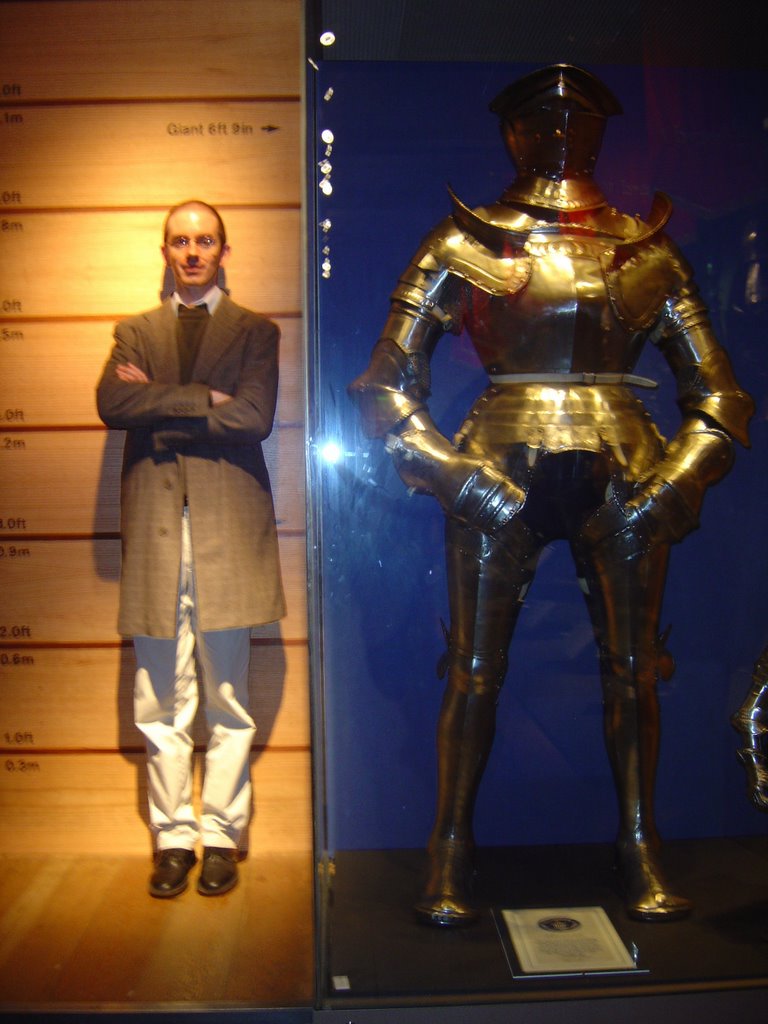
So yes, relaxed, comfy and a little older. Possibly a little wiser and feeling more settled in my life path (academia, ho!), but certainly no taller this birthday (see photo).